How Southern Idaho Homeowners Can Prepare Their Roof for Winter
A missing shingle is easier to spot before it disappears under snow. The same goes for loose flashing or a gutter packed with leaves. Fall gives you a chance to find those problems while there’s still time to address them.
To prepare your roof for winter, start with a ground-level check. Clear the drainage system and schedule an inspection if you notice damage or haven’t had the roof checked recently. At Riverbend Roofing, we help Southern Idaho homeowners understand what needs attention before winter weather makes roof work more difficult.
Start Before Snow Covers the Roof
October is a good time to begin winter roof preparation in Idaho. You can see the roof’s condition more clearly and leave room to schedule repairs before persistent freezing weather arrives.
Start sooner if you’ve noticed a leak or your home recently experienced strong winds. An active problem shouldn’t wait for a seasonal maintenance appointment.
Walk around your home on a clear day and look at the roof from several angles. Binoculars can help you see details without climbing a ladder.
Look for:
- Missing shingles or pieces of roofing in the yard.
- Shingles with lifted edges or visible cracks.
- Metal flashing that appears bent or separated from the roof.
- Branches touching the roof.
- Gutters pulling away from the fascia.
- Debris collecting where roof slopes meet.
A ground-level check is useful, but it won’t reveal everything. A roofer can examine areas you can’t safely see and determine whether an apparent problem needs repair.
Have Damaged Shingles Checked
Shingles help shed water toward the roof edge. When they’re missing or damaged, the roofing layers underneath become more exposed to weather.
Pay attention to changes after a windstorm. A lifted shingle may still be attached, but its seal could be compromised. A few loose pieces in the yard are also worth investigating.
Finding damage doesn’t automatically mean you need a new roof. The right next step depends on how widespread the damage is and the condition of the surrounding materials. An inspection can help establish whether a localized repair is appropriate.
Our Residential Roofing services cover repairs and replacement when the roof’s condition calls for it.
Check Flashing and Other Potential Leak Points
Some leaks begin where the roof meets another surface. Flashing directs water away from these transitions, including the base of a chimney and the edges of a skylight.
- Before winter, have a roofer check:
- Flashing around chimneys and roof-to-wall connections.
- Pipe boots surrounding plumbing vents.
- Skylight flashing.
- Roof valleys that carry runoff.
- Exposed fasteners or deteriorated seals where applicable.
Putting roof cement over a questionable spot may hide the problem without correcting it. A lasting repair needs to address how water is getting in and restore the proper drainage path.
Inside the house, take note of new ceiling stains or peeling paint near an exterior wall. If you can safely access your attic, look for damp insulation or staining on the underside of the roof deck. Share those observations with your roofer; the source of a leak may be some distance from the visible stain.
Clean Gutters and Make Sure Downspouts Drain
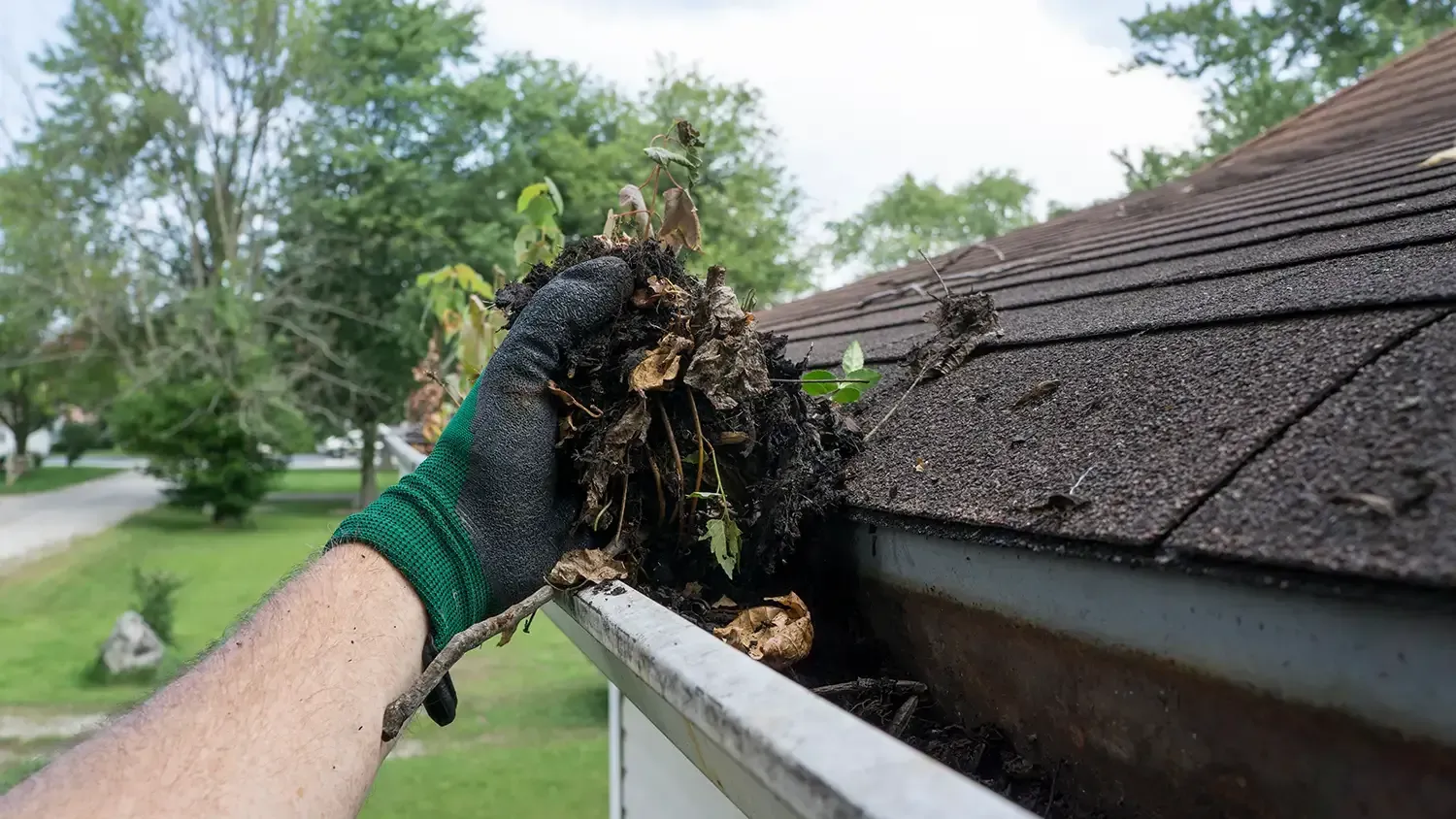
Your roof needs somewhere to send rain and melting snow. Gutters filled with leaves can overflow, allowing water to run behind the gutter or down the siding.
Once most nearby leaves have fallen, arrange for gutter cleaning. Check again after a windy day if trees surround your home.
Cleaning should include more than removing visible debris. Downspouts need to be clear, and gutter connections should be secure. Water should discharge away from the foundation rather than collect beside it.
During rainfall, watch from the ground for overflow or water escaping at gutter seams. Those observations can help identify a blockage or a section that needs adjustment.
Riverbend’s Gutter services can help with cleaning and repairs before winter runoff becomes a concern.
Button: Schedule Gutter Service
Review Attic Ventilation and Insulation
Winter preparation also includes the space beneath the roof.
Heat escaping into the attic can warm the roof and melt snow. When that water reaches colder eaves, it can refreeze and form an ice dam. Water may then back up beneath the roofing.
Reducing that risk requires looking at the attic as a system. Insulation matters, but so does limiting air leakage from the living space and maintaining appropriate ventilation.
Keep stored items away from attic vents. If insulation blocks the airflow path near the eaves, ask a professional to assess it. Don’t close vents simply because the weather is getting colder.
Repeated ice buildup along the roof edge is worth discussing during an inspection. Cleaning gutters supports drainage, but it doesn’t resolve every cause of ice dams.
Remove Debris and Address Overhanging Branches
Leaves caught in roof valleys can hold moisture and interfere with runoff. Branches rubbing against shingles can wear their surface, while damaged limbs above the house may pose a problem during wind or snow.
Have roof debris removed safely. For large limbs or branches near utility lines, contact a qualified tree professional.
Avoid climbing onto the roof to finish a fall checklist. Wet leaves and frost can make footing unreliable even when the roof looks dry from below.
Decide What Needs Attention Before Winter
Not every roof concern has the same urgency. Ask your roofer to explain which repairs should happen promptly and which areas can be monitored.
-
- Prioritize an assessment if you notice:
- An active leak or damp attic insulation.
- Missing roofing that leaves underlying materials exposed.
- Loose flashing or damaged vent boots.
- Sagging or a visible change in the roofline.
- Gutters detaching from the house.
A good inspection should give you a clear explanation of the findings. Ask what caused the damage and whether the proposed repair addresses that cause.
Cold weather doesn’t automatically prevent roof repairs, but safe access and suitable installation conditions can limit when work happens. Scheduling ahead gives you more room to plan.
Get Your Roof Ready With Riverbend
Our Southern Idaho roofing team serves homeowners in Idaho Falls and Twin Falls. If you’ve spotted damage or want help checking your roof before winter, we can assess its condition and explain your options.
Tell us about any leaks you’ve noticed and whether the roof has been repaired before. That information helps us focus on the areas that concern you most.
Button: Request a Free Estimate
Frequently Asked Questions
When should Southern Idaho homeowners prepare their roof for winter?
Early fall is a practical time to start. Aim to complete an inspection and necessary maintenance before regular snowfall or persistent freezing temperatures. If you already have a leak, arrange an assessment promptly.
What roof problems should be fixed before snow arrives?
Active leaks and missing shingles deserve prompt attention. Damaged flashing or vent boots should also be assessed before winter moisture reaches vulnerable areas. Loose gutters need attention so they can carry runoff properly.
Can freezing temperatures make roof damage worse?
Yes. Water that enters an existing gap can freeze and expand, potentially worsening damage. Snowmelt can also reach openings that were less noticeable during dry weather. Freezing weather doesn’t mean every roof will develop problems, but it makes existing defects worth addressing.
Should gutters be cleaned before Idaho winter weather?
Yes. Clear leaves and other debris before winter, and make sure downspouts drain freely. Homes with nearby trees may need another check after the remaining leaves fall or after a windstorm.
Does Riverbend serve Idaho Falls and Twin Falls?
Yes. Riverbend Roofing serves both Idaho Falls and Twin Falls. Contact our team to discuss your roof’s condition and request a free estimate.