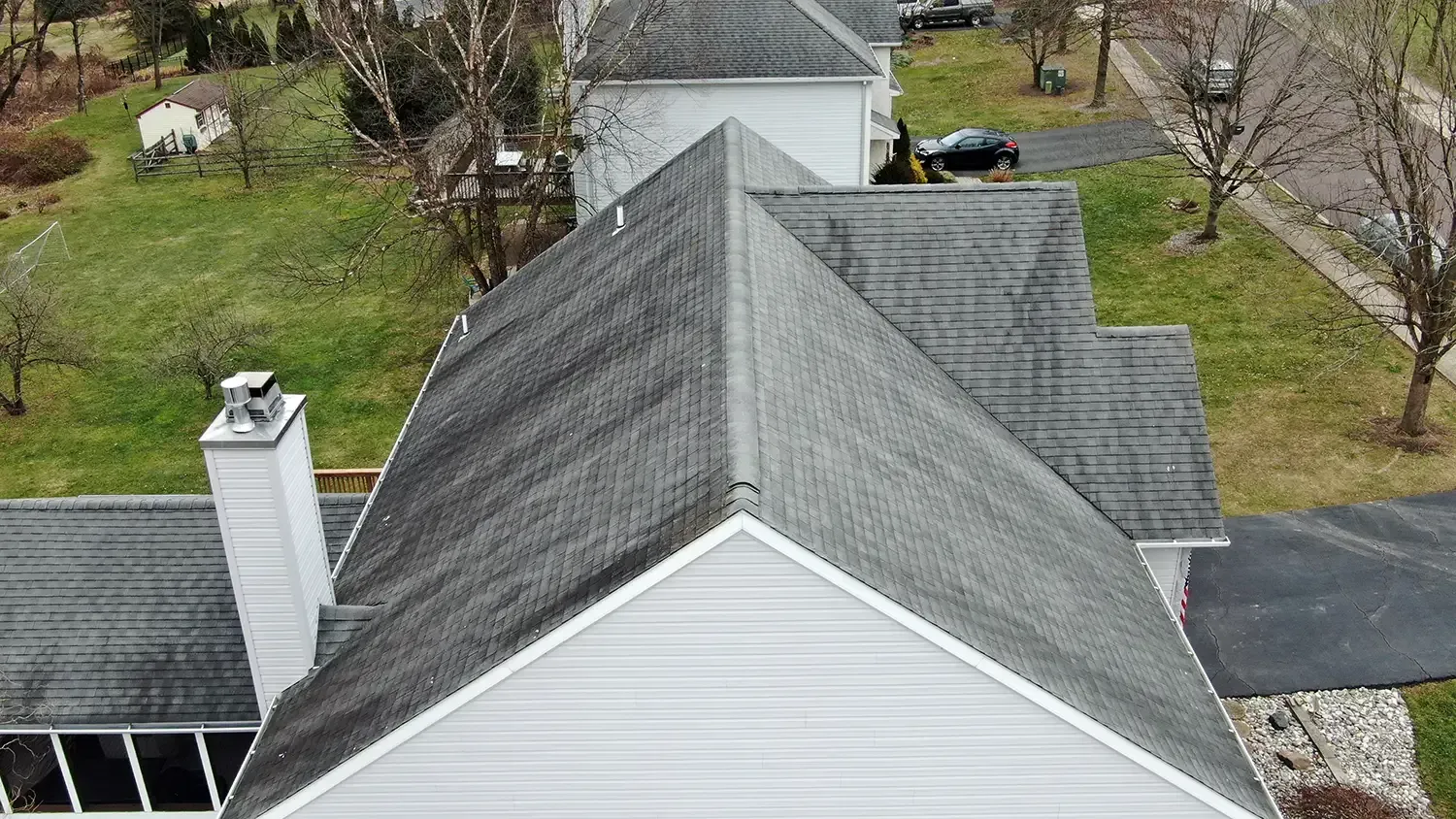
Gutter Cleaning Before Winter: How to Prepare for Snow and Ice in Northern Utah
A gutter full of leaves may go unnoticed on a dry fall afternoon. Once rain or melting snow starts moving off the roof, that blockage becomes harder to ignore. Water spills over the edge instead of reaching the downspout, and freezing temperatures can turn trapped water into ice.
Gutter cleaning before winter gives you a chance to find those problems while they’re easier to address. It also helps you spot damage that cleaning alone won’t fix.
At Riverbend Roofing, we recommend checking the entire drainage path before sustained freezing weather arrives. Start where water enters the gutter and follow it all the way to where it drains into your yard.
Your Before-Winter Gutter Checklist
Choose a dry day with temperatures above freezing. You can check for many problems from the ground, especially during rainfall. Leave elevated work to a professional if access is difficult or the ground is unsafe for a ladder. Never climb onto a snowy or icy roof.
1. Remove Leaves and Debris
Clear accumulated debris from the gutter channel, paying particular attention to the downspout opening. A small pile of wet leaves at that outlet can hold up drainage along an otherwise clear gutter.
Remove the material rather than pushing it into the downspout with a hose. Flushing a blockage farther into the system can make it harder to reach.
For fall gutter cleaning in Utah, timing matters. Clean before freezing weather settles in, then check again after nearby trees finish dropping their leaves. Homes beneath mature trees may need more than one fall cleanup.
Gutter guards also need attention. Debris can collect on top of them or around their edges, so don’t assume a covered gutter is ready for winter without checking it.
2. Test Water Flow
Once debris has been removed, check whether water reaches the downspout and exits freely. A gentle hose test can help when temperatures are safely above freezing and runoff won’t create an icy surface.
Watch for:
- Water spilling over the gutter edge.
- Drips at seams or corners.
- Water escaping behind the gutter.
- Slow or absent flow from the downspout.
- Pools remaining in the gutter after the test.
An empty-looking gutter can still have a blocked downspout. If water backs up, stop the test and have the obstruction addressed.
3. Check Where Downspouts Discharge
Getting water off the roof is only part of the job. It also needs a safe route away from the house.
Look at each downspout outlet. An extension that has come loose may release water right beside the foundation. A splash block pointing toward the house can send runoff in the wrong direction.
Before winter, confirm that discharge:
- Flows away from the foundation.
- Reaches ground that slopes away from the home.
- Avoids steps and walking surfaces where ice could form.
- Does not drain onto neighboring property.
- Has a clear outlet if connected to an underground drainage system.
The right extension length depends on your yard’s grading and drainage setup. If water still pools near the house, a longer extension may help, but the underlying drainage problem may need attention too.
4. Look for Sagging Sections and Loose Fasteners
Stand back and look along the gutter line. A noticeable dip can collect water even after the gutter has been cleaned. Also check for sections pulling away from the roof edge. Loose hangers or fasteners can leave the gutter vulnerable when ice adds weight. A fastening problem may involve more than the hardware. If the fascia board behind the gutter is deteriorated, simply tightening a screw may not provide a lasting repair. The attachment surface needs to be sound.
5. Check for Leaks and Poor Slope
Gutters need a gradual slope toward their outlets. When that slope is incorrect, water can sit in low spots instead of draining.
If the same section holds water after every rain, ask for an alignment check. Repeatedly cleaning that area won’t correct its pitch.
Leaks also deserve a closer look. A drip at one seam may be repairable, while water running behind the gutter can indicate an installation or roof-edge problem. Note where the water appears so the cause can be evaluated rather than covered with a temporary patch.
6. Identify Damaged Sections
Inspect visible areas for cracks or bent metal. Pay attention to downspouts that have been crushed near ground level, where damage can restrict the outlet.
Some damage can be handled with a localized repair or section replacement. More extensive deterioration may make a broader replacement the better choice.
Signs worth having assessed include:
- Holes or corrosion across multiple sections.
- Repeated leaks after previous repairs.
- Severe bending that prevents drainage.
- Gutters that keep pulling away from the house.
- Overflow that continues after cleaning and alignment have been checked.
Age alone doesn’t determine whether gutters need replacement. Their condition and ability to manage runoff matter more.
Why Clear Gutters Matter When Temperatures Drop
A blocked gutter can overflow during rain or a winter thaw. That water may soak the ground beside your home or repeatedly wet the exterior.
Water trapped in a poorly draining section can also freeze. The added weight puts stress on the gutter and its attachments, particularly where supports are already loose.
Cleaning helps reduce these drainage problems, but it does not guarantee an ice-free roof. Roof ice dams often involve uneven roof temperatures associated with heat escaping from the house. Persistent ice along the eaves may require a roof and attic evaluation as well as gutter maintenance.
If you notice winter leaks or recurring ice at the roof edge, our residential roofing team can help assess the roof’s condition.
Should You Repair or Replace Before Winter?
A single leaking joint doesn’t automatically mean you need new gutters. If the surrounding material is sound and the system drains correctly, a targeted repair may be enough.
Replacement becomes more reasonable when damage is widespread or the existing system cannot be restored to dependable operation. Repeated overflow may also call for a review of gutter capacity and downspout placement.
For homeowners considering gutter repair in Logan, Utah, the first step is identifying why the problem keeps happening. If gutter replacement in Logan, Utah, is recommended, ask what a new system would correct.
Our gutter services cover cleaning and repairs as well as replacement options. We can help you understand which approach fits your home.
Get Your Gutters Ready Before the First Lasting Freeze
Winter gutter maintenance starts with checking how the system works while water can still move through it. Clear the debris, observe the drainage, and address sections that leak or sag before they’re carrying extra weight.
Riverbend Roofing & Exteriors can help you identify what's causing your gutter problems and determine whether cleaning, repair, or replacement is the best solution.
Contact our team to discuss your concerns and get your gutters ready for winter.
Frequently Asked Questions
Should gutters be cleaned before winter?
Yes. Remove fall debris before sustained freezing weather arrives, then check again if nearby trees continue dropping leaves. Clear gutters and open downspouts give rain and snowmelt a path away from the roof.
Can clogged gutters cause ice buildup?
They can contribute to ice buildup by holding water that later freezes. However, roof ice dams can develop even when gutters are clean. Recurring ice at the roof edge should be evaluated for roof and attic-related causes.
When should gutters be repaired instead of replaced?
Repair is often appropriate when damage is limited and the rest of the system remains sound. Widespread corrosion or repeated failures may make replacement more practical. An inspection helps determine whether the problem can be corrected reliably.
Can snow damage gutters?
Yes. Heavy accumulation and sliding snow can bend gutters or pull them away from their supports. Existing attachment problems increase that risk. Avoid striking gutters or chipping away ice, which can cause additional damage.
How should downspouts drain before winter?
They should discharge freely onto a route that carries water away from the foundation. Keep outlets clear and check that extensions remain connected. Avoid directing runoff across walking surfaces where it may freeze.